Write
50 affirmations for new beginnings: your first days
Find words for your first days in a new job, city or chapter: 50 grounded affirmations, three ready scripts and a short audio you can make your own.
- Published
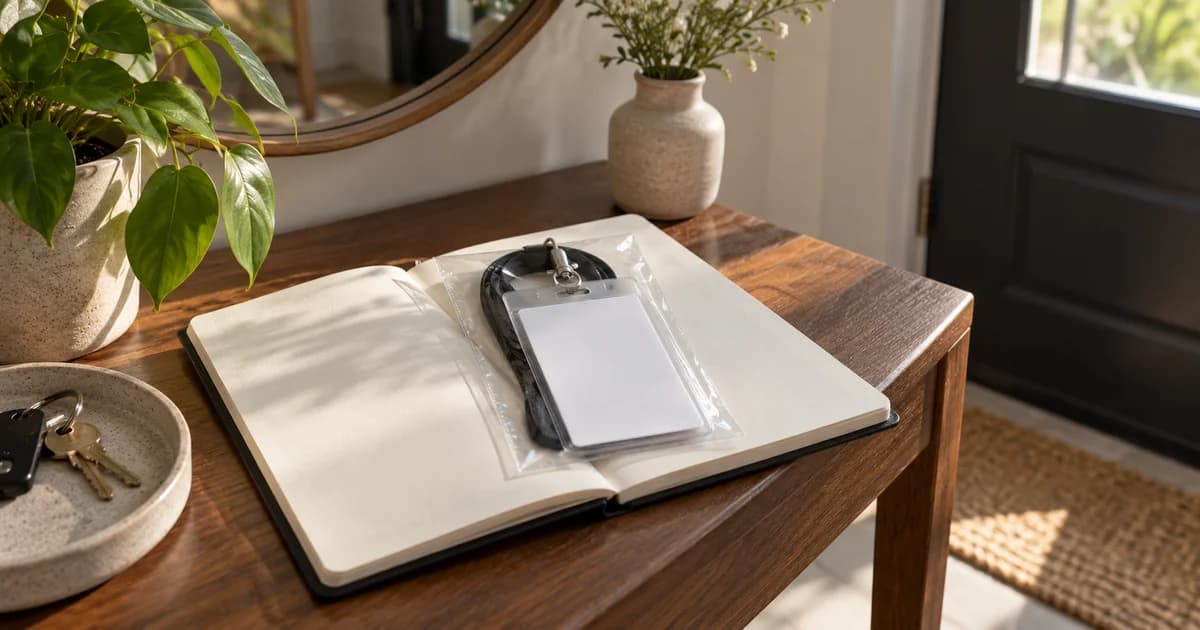
Your staff badge is still wrapped in plastic. At 8:43, you stand outside a building with two entrances. You check the welcome email again. Which door? Good affirmations for new beginnings meet you right here: “I find the entrance and ask for my contact.” One ordinary sentence for a morning when nothing feels ordinary yet.
Start with words you can change.
Edit every line, then carry the script into the free maker.
12 lines · 5 min test
Your first morning at the design office. Before leaving for your first morning at a new design office. Keep only the lines that sound natural to you.
One spoken idea per line. Nothing is saved until you open the maker.
Give your beginning an address and a first day
A new beginning has unfamiliar details: your student login, the bus stop outside an address you now live at. Write down which one you face this week. “Start my new life” leaves you staring at the ceiling; “find the reception desk on Monday” gets you moving.
Choose one sentence and try the free generator’s voice preview now. Compare the sound before creating your first-week audio. Keep the wording on your phone for the journey too.
A chosen move and a rejected application both leave you with practical questions. Save the verdict on your entire future for another day. Today, find your contact.
Ten affirmations for your first days in a new job
The onboarding calendar has six names you have never heard before. You are trying to remember the printer code while someone explains the shared drive. Keep a page called “Questions for tomorrow.” Learning a workplace takes more than the tour.
If you know the work but not the local process, ask to see one completed piece. Getting oriented is a sensible use of your first week.
- I find the entrance and ask for my first-day contact.
- I write down a colleague’s name when we meet.
- I can ask to see one finished piece of work.
- I check the instructions before using an unfamiliar system.
- I tell my manager which part of onboarding needs another explanation.
- One question comes with me to my first team check-in.
- I am learning where the shared files live.
- I can ask when the team usually takes lunch.
- My notes hold the terms I hear for the first time.
- I end my first day with a question ready for tomorrow.
Ten affirmations for moving to a city where you know nobody
It is your third afternoon at the new address. You know the supermarket route and almost nothing else. Start with a place you can return to: the public library, a nearby park or the same corner shop. Becoming familiar with a city takes repeat visits, including quite unremarkable ones.
- I am learning the names of the streets beside mine.
- The bus route from my new address is saved on my phone.
- I can ask a neighbor when the bins go out.
- I visit the library before I know anyone here.
- I introduce myself at one local event.
- One familiar café is enough for this week.
- I put a second neighborhood walk on my calendar.
- I can ask someone where they buy their groceries.
- I tell an old friend about one place I found today.
- I choose one nearby place to visit again next week.
Ten affirmations for going back to school at thirty or later
Your first seminar starts in room 214. The student portal has sent you three messages, and you are working out which reading is actually due. Find that out first. At thirty-two, learning the course begins with the same reading list as everyone else.
Ask about access and office hours this week. Put the first reading deadline in your calendar before planning your whole degree.
- My course timetable comes with me to the first seminar.
- I can ask where the assigned reading is posted.
- I am learning the student portal one page at a time.
- I take notes while I get used to being in class again.
- I introduce myself with my name and the course I am taking.
- I can ask a tutor how to prepare for the next session.
- One study slot has a place in my working week.
- I look up a term I have not used in years.
- Today I sit beside someone new in class.
- I use office hours while the first assignment is still taking shape.
Ten affirmations for a first week after a breakup or a long pause
The Saturday calendar is suddenly blank where a shared plan used to sit. Choose something that makes the afternoon yours: visiting the market, inviting a friend for lunch or booking a seat at a local film screening. You can make one new arrangement while your feelings remain complicated.
An old conversation keeps pulling you back? The letting go affirmations give you words for putting it down while you make new plans. If grief or distress is making daily life hard, bring a trusted person or qualified support into the picture; an audio cannot carry that for you.
- I choose what goes in my newly free Saturday afternoon.
- I invite a friend to lunch in my own words.
- I am finding a class that fits my changed weekly schedule.
- I book one seat for a film I want to see.
- I can tell a friend which evenings now feel unfamiliar.
- I join the hobby group as a first-time visitor.
- My shopping list fits the meals I now cook.
- One new appointment has a place on my calendar.
- I arrive at the event with a short introduction ready.
- I plan next weekend using the week I actually have.
Ten affirmations for Monday after an unsuccessful attempt
The course application was declined on Friday. Monday brings a different form, with different requirements, and you are reading it through the lens of the last answer. Give this application a clean set of notes. Write its actual deadline at the top.
A disrupted plan calls for resilience affirmations about revising commitments. A new application starts with the requirements of the place you are applying to now.
- I read this application’s requirements on their own page.
- The new deadline has its own entry in my calendar.
- I can ask what the next intake requires before applying again.
- I make a new folder for the attempt I am starting.
- I check which documents still need updating.
- I can request feedback on the part that was unclear last time.
- I draft a new opening for the opportunity in front of me.
- I show the revised application to someone who knows the requirements.
- I describe this attempt in terms of the place I am applying for.
- I save the submission receipt where I will find it.
Trade a grand declaration for a line you can use
“Everything is falling into place” sounds suspicious when you cannot find your classroom. Name the thing you can do next. A softer sentence can still be specific: “I am learning where my classes meet” gives the uncertainty a location.
Use one detail from your first week. Say the sentence as you would to a friend. “Meet everyone” becomes “introduce myself to the person beside me.”
I belong everywhere.
- What gets in the way
- Too much to claim.
- Usable wording
- I can ask where to sit.
My new life is perfect.
- What gets in the way
- Day three disagrees.
- Usable wording
- I am learning my bus route.
I never feel out of place.
- What gets in the way
- New rooms feel new.
- Usable wording
- I stay for the introduction.
This time I cannot fail.
- What gets in the way
- An outcome is still open.
- Usable wording
- I check this form’s requirements.
Choose three lines for your next unfamiliar day
Circle three lines from one situation. Order them as you will need them: arrive, ask, leave with something written down. An introduction, an example document and tomorrow’s question follow a real day.
Putting off familiar work? Try the motivation affirmations. Breakfast and your usual routine belong with morning affirmations; longer-term goals with success affirmations. For a new beginning, name what you are still learning to do or find.
Try one written cue before your first team meeting. By Thursday, that question has an answer. Cross the line out and choose the next unknown.
Twelve lines before your first morning at the design office
Your welcome email says to ask for the studio coordinator. Read with that email open, then close the audio before you enter.
Paste your first-morning script into the generator, then choose a voice and background for the pause before you leave.
- I check the studio address before leaving home.
- I look for reception when I arrive.
- I can ask for the person named in my first-day instructions.
- I introduce myself with my name and new role.
- I follow the studio tour one room at a time.
- I note where today’s onboarding session takes place.
- I can ask where to put a question about the software.
- I watch one demonstration before trying the process.
- I tell the person showing me when I need another look.
- I check what I should bring back tomorrow.
- I write down the name of the person who can help.
- My notes hold tomorrow’s arrival time.
Eleven lines before your first library visit in a new city
It is Wednesday, and the library is four streets from your new place. Save the opening hours and take the documents listed for joining. Find the desk first; the reading group comes later.
Keep the list in your phone notes for the walk. Before heading home, save the hours for your next visit beside the route.
- I check when my nearest library opens today.
- The walking route from my new street is saved on my phone.
- I bring the documents listed for joining.
- I can ask at the desk about getting a library card.
- I tell the librarian I have just moved nearby.
- I can ask where to find the books I usually read.
- I start with one shelf in this unfamiliar building.
- I look at the noticeboard for local activities.
- I note one event whose time fits my week.
- I choose a book to read in my new place.
- The next opening time is in my notes before I leave.
Eleven lines before your first college seminar at thirty-two
Your timetable says 6 p.m., after work. Read these at home with the room number beside your bag. Pack the assigned reading before leaving.
After the session, add the next reading deadline to your calendar while the tutor’s instructions are fresh.
- I check the room number on my seminar timetable.
- I bring the reading and a pen I know works.
- I find the building before the session starts.
- I can ask whether this is the right room for my course.
- I choose a seat where I hear the discussion clearly.
- I introduce myself as someone taking this course.
- I mark the passage the tutor asks us to discuss.
- I can ask what an unfamiliar course term means.
- I write down where the next reading will appear.
- I check the deadline before I leave the room.
- My notes go beside the materials for next week.
What a fresh start changes in the research
Dai, Milkman and Riis’s fresh-start research found increased goal-related activity after landmarks such as a new week or semester across three archival studies. A new semester gives your first class a date; your sentence gives that occasion an action, such as asking where the reading is posted.
Gollwitzer’s implementation-intention paper examines linking a recognizable situation to a response. Put the distinction to use on your timetable: “When the seminar ends, I will check the reading deadline.” It names an occasion and an action more precisely than “I embrace my future.”
Wood and colleagues found that repeating a broad positive self-statement left some participants with low self-esteem feeling worse. Cohen and Sherman’s review concerns self-affirmation interventions that typically involve writing about core values. These are different activities; neither validates the fifty original lines or establishes an effect for a Supral recording.
Make a short recording for the pause before you leave
Paste one affirmation per line, up to 280 characters each. A line without a letter or number is ignored, so dotted lines will not become spoken pauses. Supral offers 18 voices across six languages, with female and male choices. For English, compare Jenny and Guy, both American, or Sonia, British. Start with Normal pace; Slow and Fast are available too.
Try Rain, Ocean, Campfire, Lo-fi or Pink noise, or choose Silence while judging the voice. Leave the optional frequency layer off for a straightforward first version. The free 15-second preview uses no creation or credit and plays a demonstration phrase for comparing the voice, pace and background. Read your own script aloud now and check its wording in the completed file.
MacLeod and colleagues studied recognition memory for words read aloud versus silently. Speaking your lines also lets you hear awkward wording: does “studio coordinator” trip you up? Split a sentence where you run out of breath.
“AI draft” writes twelve editable lines from your goal, once daily without an account or three times with a free account. Give it the actual occasion, such as your first evening seminar, then replace broad suggestions with the room, question or material you need. Your phone’s recorder also works for keeping a spoken version.
Keep the first-week version easy to find
Without an account, Supral sends your 320 kbps MP3 by email through a private link valid for 48 hours. A free account gives you three daily creations, tracks up to five minutes and “My tracks” to keep your recordings together. Name yours “First week at the studio” so it is easy to find on Tuesday morning.
Supral+ gives you nine daily creations, 10- and 30-minute tracks, and access to WAV through its credits and options. Pro includes My Voice credits for narration cloned from your own voice. For the pause before a first seminar, the free standard voice and a short file are enough to try the format.
Check the wording and mix of your MP3 with the finished-track check. On Friday, compare your three lines with your notes: which question has an answer? Archive your first-day version once you know your way in.
Sources and further reading
These references support the evidence and safe-listening limits discussed in this guide.
Frequently asked questions
What are good affirmations for new beginnings?
Choose words about today’s unfamiliar detail: “I can ask where the assigned reading is posted” or “I write down a colleague’s name when we meet.” Use a sentence you would actually say outside that new classroom or office.
How do you write affirmations for starting over?
Write the occasion first, such as your first library visit after moving. Add one action you will take there, then say it aloud. Replace “My whole life is transformed” with “I ask at the desk about getting a library card.”
What can you say to yourself on the first day of a new job?
Try “I can ask to see one finished piece of work” to clarify the expected standard. Before arriving, use “I introduce myself with my name and new role.” Write down the answers from the person showing you the job.
Can you use new beginning affirmations after a breakup?
Yes, for new arrangements in your week: making plans for Saturday, cooking for yourself or visiting a hobby group. A sentence about booking one seat at a film screening can fit even while you still miss your shared plans. Choose words about your own calendar.
Is it too late to start over at thirty or forty?
Check the entry requirements, costs, available time and support for the course or career move you want. At thirty or forty, those details tell you where to start. For returning to study, make your first script about the timetable, room and reading.
How many new beginning affirmations should you repeat?
Start with three lines for one situation, or use one of the complete eleven- or twelve-line scripts. Read them once before the occasion. There is no established repetition count for these original scripts. When the first-day question has an answer, replace that line with the next thing you need to learn.
Do you have to feel positive about a fresh start?
No. You can wish the change had never happened and still ask where the seminar meets. “I check the room number on my timetable” works on a miserable morning too: it gives you something specific to do before leaving home.
Can you make a free audio with these affirmations?
Yes. Paste your chosen lines into Supral, choose a free standard voice and compare the sound with its 15-second demo preview, which uses no creation. A free account allows three creations a day up to five minutes each. Check your own words in the finished MP3, then keep that version in “My tracks.”
Give your first week its own words
Choose the script for your next unfamiliar room. Edit the details, compare a free standard voice in the preview and create your short MP3.
Make your first-week audio