Understand
432 Hz vs 528 Hz for affirmation audio
Compare 432 Hz and 528 Hz with the same voice and background. Check what each label means, then keep the sound you want to hear again.
- Published
- Updated
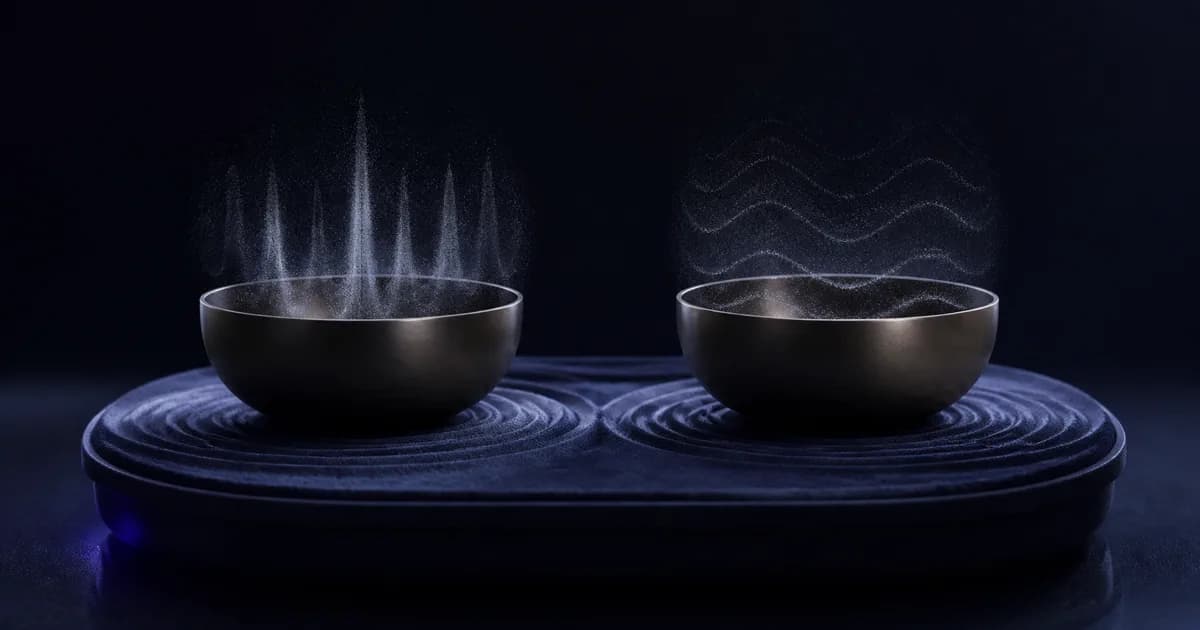
You switch a rain-backed affirmation from 432 Hz to 528 Hz and wait for a dramatic difference. Mostly, you hear a higher tone. That is a useful place to start. For your mix, I would choose the layer you can live with after several minutes, and keep a version with no tone for comparison. Neither number is a universal winner. Check what the label means before you compare them.
What the labels can mean
A 528 Hz layer usually adds a steady tone at 528 cycles per second. A 432 Hz label is less specific: it might mean a direct tone, or music with A4 tuned to 432 Hz instead of the common 440 Hz reference. Retuned music and a tone laid under speech are different things.
Look at the tool's description or the track's production notes. Compare direct tone with direct tone, rather than assuming two matching labels mean matching construction.
The audible difference in a mix
The direct 528 Hz tone has a higher pitch than 432 Hz. Depending on your background, it may stand out more. Either can wear on you if you mix it loudly or leave it exposed for a long session.
Listen to the rain or ambient bed too. A bright hiss or a busy musical passage may affect your comfort more than the difference between those two pitches.
Choose with a short A/B test
Make two short versions with the same script, voice, pace, and background. Change only the tone and compare at the same device volume. Listen beyond the first ten seconds, then try your no-tone version. Keep the one you want to hear again.
- Keep everything except the tone the same.
- Compare at the same playback volume.
- Give each version more than ten seconds.
- Compare with a version that has no tone.
Do not attach guaranteed outcomes
A frequency label does not establish body repair, guaranteed manifestation, or a particular transformation. Enjoy a tone as part of the sound or ritual you like; keep care and practical action where you need them.
Frequently asked questions
Is 432 Hz or 528 Hz better for affirmations?
Choose the one you prefer hearing over several minutes. Compare otherwise identical short mixes and choose the frequency layer that feels less distracting and more comfortable over time.
Does 432 Hz always mean the same type of audio?
The label can mean two different things. It may describe a direct 432 Hz tone or music tuned with A4 set to 432 Hz. Check how the particular tool or recording uses the label.
Can I make an affirmation track without either frequency?
Yes, you can skip the tone entirely. A frequency layer is optional. The script, voice, background balance, and replay comfort are the more practical parts of the track to test first.
Make a short version first.
Test your words, voice, and background in a private MP3 before building a longer listening routine.
Create the track