Understand
Binaural beats vs solfeggio frequencies
Choose binaural beats or a direct solfeggio-style tone by your headphones, speaker, and sound preference. You can leave both out.
- Published
- Updated
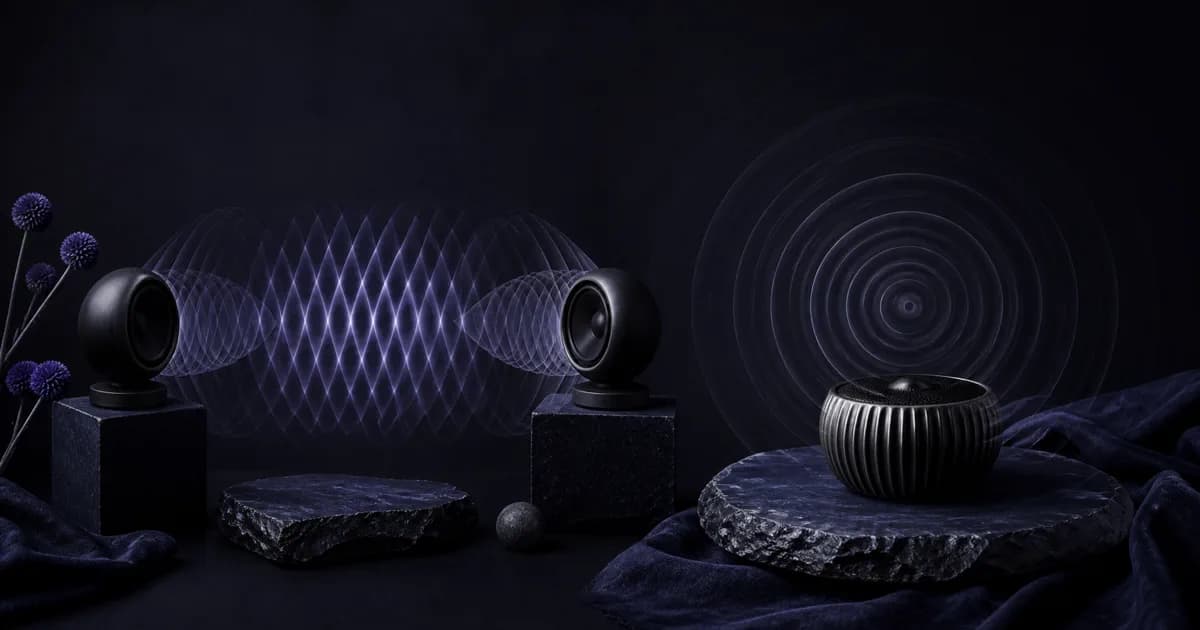
You are choosing a background and see '4 Hz binaural' beside '528 Hz.' They look like competing flavors on the same menu, but they describe different sounds. A binaural beat comes from a difference between what each ear receives; a solfeggio-style layer adds a selected audible tone. Start with the listening setup: if you want to use a speaker, I would leave the binaural option off. Then choose by what you enjoy hearing.
How binaural beats are made
For a binaural beat, the left and right ears receive slightly different tones. You perceive a beat corresponding to the gap between them. Stereo headphones normally keep those signals separate so you can hear the intended effect.
With a 4 Hz difference, the label refers to that perceived beat. You are not listening to a separate audible tone at 4 Hz. The difference and the two tones that create it are different numbers.
How solfeggio layers are made
A direct layer adds an audible tone, such as 174 Hz, 432 Hz, or 528 Hz, to the file. Tools may group these under a solfeggio-style menu. You can play the result through speakers or headphones, quietly beneath a voice, music, or nature sound.
You may like the traditions or meanings attached to a number. Keep those as part of your own ritual. They do not establish a clinical result or guarantee that the frequency will do what its description promises.
Which one fits an affirmation track?
Use binaural audio for a private stereo-headphone session if you like the effect. Choose a direct tone if you switch between headphones and speakers. There is little point picking a setup you will find awkward to use.
You can skip both. Rain, colored noise, ambient audio, or a voice with no background gives you a perfectly workable first track. Add a tone when you want its sound, rather than because the file seems incomplete without it.
- Always using stereo headphones? You can try binaural.
- Switching devices? Try a direct tone or leave tones off.
- Steady tones bother you? Try a nature recording.
Keep the claim proportional to the evidence
A frequency layer can color the mood of a session. It has no place being sold as a treatment for a health condition or a replacement for sleep, care, practice, or action. Let the sound do the modest job you chose it for.
Frequently asked questions
Are binaural beats and solfeggio frequencies the same thing?
They describe different ways of making sound. A binaural beat is perceived from the difference between separate tones sent to each ear. A solfeggio-style layer is a direct audible tone associated with a selected frequency.
Do binaural beats require headphones?
Normally, yes: each ear needs its own tone for the intended binaural effect. A direct frequency layer can be heard through headphones or speakers.
Does an affirmation track need a frequency layer?
You can leave it off. Frequency layers are optional. Rain, colored noise, ambient sound, music, or a voice-only track can all provide a practical listening format.
Make a short version first.
Test your words, voice, and background in a private MP3 before building a longer listening routine.
Create the track