Write
50 affirmations for forgiving yourself after a real mistake
Choose 50 affirmations for forgiving yourself after hurting someone or losing time, plus three scripts for making amends and putting down the replay.
- Published
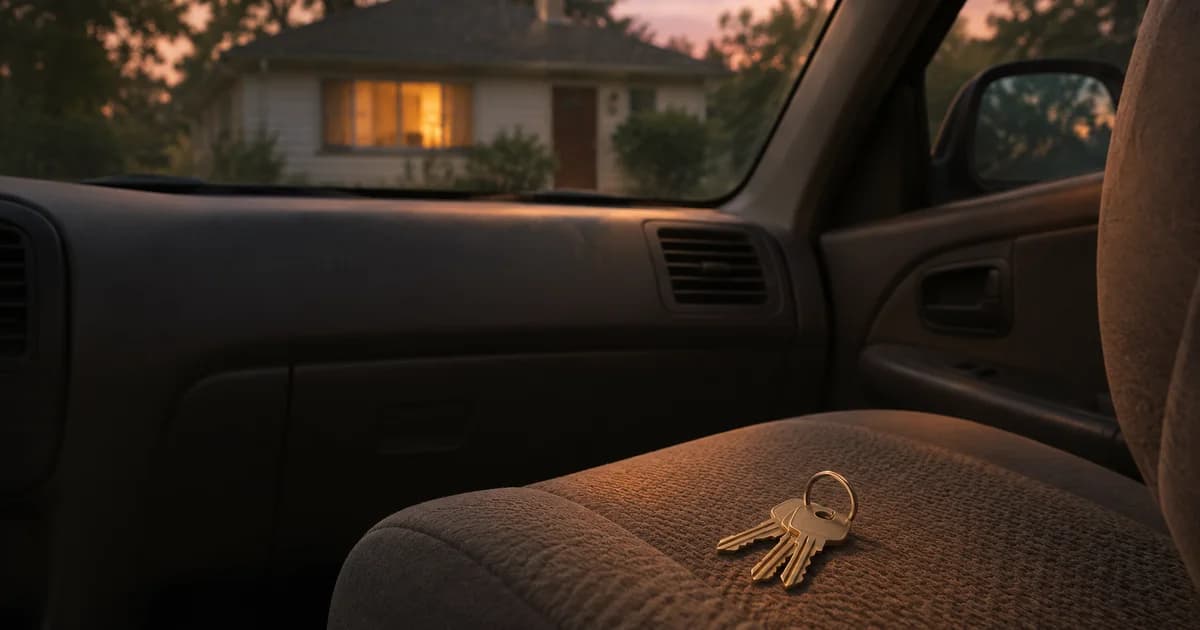
6:12 p.m. You sit in your car outside your sister's house, engine off. The remark you made at her wedding was three years ago. She forgave you long ago. You still rehearse the sentence before every visit, fingers wrapped around the keys. Inside, she is probably wondering why you haven't rung the bell. “She has heard my apology; I can go in and ask about her day.” Affirmations for forgiving yourself can be that plain. The remark stays wrong. Tonight's visit can still happen.
Start with words you can change.
Edit every line, then carry the script into the free maker.
11 lines · 5 min test
Before you ring your sister's doorbell. Before visiting your sister after she has accepted your apology. Keep only the lines that sound natural to you.
One spoken idea per line. Nothing is saved until you open the maker.
Keep the mistake small enough to name accurately
You made a hurtful remark during the speeches. Say that much. “I ruin every family occasion” adds events that never happened. An honest sentence leaves the harm visible and gives you something specific to answer for.
Make a short track for the pause before you visit with three lines: what happened, what you have put right, and what you will do next. Choose words you could say with your hand already on the door handle.
If you still owe an apology, that's the place to start. An apology already accepted can stay accepted. When you need words for being turned down rather than for harm you caused, use affirmations for rejection. For everyday kindness toward yourself beyond this mistake, try self-love affirmations.
Eight affirmations after something hurtful you said
Your first draft says “Sorry if you were offended.” That if is doing a lot of work. “I'm sorry I made that joke about you” owns the remark without asking them to prove it hurt. Being nervous can come up later; they deserve to hear the apology first.
- That joke hurt her, even though I wanted a laugh.
- I owe her an apology for that remark.
- Being nervous doesn't excuse what I said.
- Remembering her face still makes me wince.
- Next time I tell a family story, I leave her out of the joke.
- I send my apology without asking her to make me feel better.
- When she talks about that day, I listen to her version.
- Her forgiveness counts, even while I'm learning to forgive myself.
Eight affirmations for the call or visit you missed
Your dad's missed call is still in the log. Or a friend spent Saturday waiting for help you promised. Start with the thing left undone, then offer something you can keep: a call this evening, a specific date, the errand they still need.
- I call my dad before another evening slips by.
- It hurts that I left that call for “later.”
- This time, I'll be there when I say I will.
- Being busy explains the week; it doesn't erase that I let them down.
- Saturday mattered to them; I can call and say I'm sorry.
- A ten-minute call fits before I start the washing-up.
- I can be sorry and still deserve a good day.
- I ask when they want to talk, then wait for the answer.
Eight affirmations after you mishandled money
The statement is unopened because you already know you overspent. Open it. If you owe someone money, check the amount and agree what you can repay and when. A promise you can keep gives them more than another description of how awful you feel.
- That was money we needed, and I wish I hadn't spent it.
- I can open the statement and face what I owe.
- Seeing that total makes my stomach drop.
- I promise an amount I can actually repay.
- On Friday, I make the first repayment we agreed to.
- I can repay this without hating myself until the last payment.
- That order can wait until I've made Friday's payment.
- I tell them if I need to change the repayment date.
Eight affirmations after you shout at your child
Milk across the floor, your voice much louder than you intended. Once you can speak quietly, say “I shouted. That was wrong, and it wasn't your fault.” Leave space for their answer. The spill can be dealt with after you have owned the shouting.
- I was too loud; my child didn't cause my shouting.
- The milk can wait; my child needs to hear I'm sorry.
- The hurt on their face is hard to bear.
- I'll sit beside them and say I'm sorry I shouted.
- There's room for their anger; I can hear them out.
- A hug can wait for them to want one.
- I wish I had handled those five minutes differently.
- When my voice rises again, I pause before the next word.
Ten affirmations for the years you wish you had spent differently
Five years in a job you wanted to leave. You kept renewing the contract, and you wish you hadn't. You don't have to feel cheerful about those years to look at one evening course. For changing the practical plan after a setback, affirmations for resilience can help you think about what to try next.
- Those years at that job still feel like a loss.
- I can update my CV at the age I am now.
- I've read that contract enough; I can put it away.
- On Monday, I ask when the evening course starts.
- I'm allowed to forgive myself for staying longer than I wanted.
- Tuesday evening is free; I could try that class.
- Staying too long cost me time I wanted for other things.
- I ask someone in the new field what their day is actually like.
- Skills from that job can go on my next application.
- There's time this afternoon to read one course description.
Eight affirmations when the chance to repair has gone
The person has died. The last visit cannot be rearranged. A letter can hold the words you wish you had said, even with no one to post it to. You can still answer a call today without pretending it makes up for that visit.
- The call I missed cannot happen now, and I wish it could.
- I can write the apology I no longer get to say.
- That letter can stay private when there is no one to send it to.
- I miss them, and I'm still sorry about that day.
- These old messages hurt tonight; I can stop scrolling.
- That missed visit was one day in the years we had.
- At lunch, I tell someone I trust what I wish I'd said.
- Today I return the call that's waiting on my phone.
Decide what you can still put right
On paper, “I owe an apology” or “I owe the next payment” gives you a place to start. “I've done what I can” is an answer too. If you've done your part, feeling guilty again doesn't mean you owe another apology.
Someone who has asked for distance gets that distance. Keep an unsent apology private and honor any practical responsibility that remains. If you are waiting for an answer, leave room for a refusal as well as forgiveness.
Once you have done your part, put the paper away. For the habit of reopening an old message, use overthinking affirmations. For a broader attachment to how the past should have gone, try letting-go affirmations.
Hurtful remark
- Still possible
- Own it; apologize.
- Where to stop
- Leave the reply to them.
Missed call
- Still possible
- Call while you can.
- Where to stop
- Hear today's answer.
Money owed
- Still possible
- Agree the next payment.
- Where to stop
- Keep that agreement.
Shouting
- Still possible
- Apologize; lower your voice.
- Where to stop
- Let your child respond.
Lost years
- Still possible
- Check one course.
- Where to stop
- Put the old paperwork away.
Someone has died
- Still possible
- Write the unsent words.
- Where to stop
- Put the letter down.
Let responsibility change the next thing you do
Wenzel, Woodyatt and Hedrick's 2012 self-forgiveness research supports taking responsibility while holding on to your values: if reliability matters to you, keep the next visit you promise. Tangney, Stuewig and Mashek's 2007 review separates shame about who you are from guilt about what you did, which is why “I let my friend down on Saturday” gives you more to work with than “I'm a terrible friend.”
Neff's 2003 account of self-compassion makes room for kindness while you change your behavior: you can apologize for shouting without calling yourself a hopeless parent. These papers don't test whether affirmation audio helps you forgive yourself. If guilt prevents you from sleeping or working, or brings thoughts of harming yourself, speak with a qualified mental health professional.
Eleven lines before you ring your sister's doorbell
These lines fit the visit after your apology has been heard and accepted. If “wedding” isn't your occasion, use the one you keep revisiting, or paste this forgiveness script into the generator for a short recording before your next visit.
- The wedding was three years ago, and I still wince.
- What I said hurt her; I have owned that.
- She has heard my apology and told me she forgives me.
- I can take her answer seriously while the shame lingers.
- She doesn't need to reassure me again tonight.
- My apology doesn't need another rehearsal in the car.
- I have come to spend this evening with her.
- There are things about her week I want to hear.
- I can forgive myself without forgetting why I apologized.
- I step out and walk to the house.
- She has heard my apology; I can go in and ask about her day.
Eleven lines before apologizing to the friend you let down
You promised to help clear the garden on Saturday and never arrived. The bags are still by the gate; collecting them is a useful offer if your friend wants it. Three sentences will do for the message: what you did, your apology and the help you're offering.
- My friend needed the help I said I would give.
- I did not show up, and they were left waiting.
- It is uncomfortable to admit that plainly.
- They deserve a plain “I'm sorry I left you waiting.”
- Being embarrassed won't stop me from saying sorry.
- I offer to collect the garden bags still by their gate.
- I'll only offer Saturday if I can actually be there.
- They get to decide whether the offer is useful.
- I send the message without asking for reassurance.
- They can take their time; I don't need to send another message.
- If they say yes, I'll be at the gate on time.
Eleven lines for the call you can no longer make
Keep a sheet of paper nearby for the words you wanted your dad to hear. You can leave the letter in a drawer afterward; you don't owe it another reading before bed.
- My dad's number is still saved on my phone.
- He is gone, and I cannot have that conversation now.
- I put off that call, and I wish I hadn't.
- That evening is one part of the years we had.
- I can write the words I wanted him to hear.
- The page has room for sorry and for missing him.
- Dad, I'm sorry I left that call so late.
- The letter can stay with me.
- I can tell someone I trust that this still hurts.
- I can leave his messages alone for the rest of tonight.
- I'll put the letter away and make a cup of tea.
Make a recording with words you can stand behind
Read the script once in your normal voice. If “I forgive myself” feels too far away, try “I'm willing to stop being cruel to myself about this.” You can start there without feeling better first. Choose one script for one moment; the fifty lines are choices to borrow from.
With a free Supral account, paste one affirmation per line and choose a standard voice for a track up to five minutes long. Under “Mix,” “Test the mix” plays a free 15-second example phrase with your selected voice and background; your own words play in the finished track.
The free account uses the default mix; changing the voice/background balance or the pauses between affirmations requires Supral+.
Leave one reminder for the next ordinary day
Put the agreed visit in your calendar or leave the repayment date beside the statement. When you've kept that promise, you can enjoy the evening too. You ring your sister's doorbell. She opens the door with a tea towel over her shoulder. “You coming in?” You step inside.
Sources and further reading
These references support the evidence and safe-listening limits discussed in this guide.
Frequently asked questions
What are good affirmations for forgiving yourself?
Try “I can be sorry and still deserve a good day” alongside a concrete line such as “On Friday, I make the first repayment we agreed to.” One makes room for self-forgiveness; the other keeps a promise.
How do you forgive yourself after hurting someone?
Name the harm, apologize and offer a repair you can keep. Their answer belongs to them. You can follow through on the repayment or visit and start forgiving yourself while you still regret the choice.
Does forgiving yourself mean what you did was okay?
No. The hurtful remark stays hurtful. Forgiving yourself means owning it, changing how you act and allowing an evening without prosecuting yourself again. Keep the apology and the change; put down the repeated insult.
What if the person you hurt won't forgive you?
Respect their answer and any distance they request. Keep practical promises that remain, such as returning money. You can work toward forgiving yourself without asking them to change their mind, and keep an unsent apology private.
How do you forgive yourself when someone has died?
You can begin forgiving yourself without pretending the missed call or visit didn't matter. An unsent letter can hold the apology you wish they could hear. Tell someone you trust about the regret, and leave room for the rest of your relationship too.
What if saying I forgive myself feels fake?
Use a sentence you can believe: “I'm willing to stop being cruel to myself about this.” You can still make the repayment or keep the visit while that feels unfamiliar. There is no need to force a declaration you don't mean.
How many self-forgiveness affirmations should you repeat?
Choose two or three for the same moment, or one eleven-line script. Read it before the apology, visit or letter, then let the final line lead to that action. Keep the fifty as a menu.
Can you make self-forgiveness affirmation audio for free?
Yes. With a free Supral account, you can turn your chosen lines into a track up to five minutes long. The sample preview lets you hear the voice and background; the finished track contains your script.
Keep a short script for your next visit
Choose the eleven lines for an apology already accepted, change the occasion and make your recording. Hear it before the visit, then ring the bell.
Make your self-forgiveness affirmation audio