Understand
Subliminal vs supraliminal: what is the difference?
Subliminal vs supraliminal: what each format lets you hear, what you can still verify, and how to make a private track.
- Published
- Updated
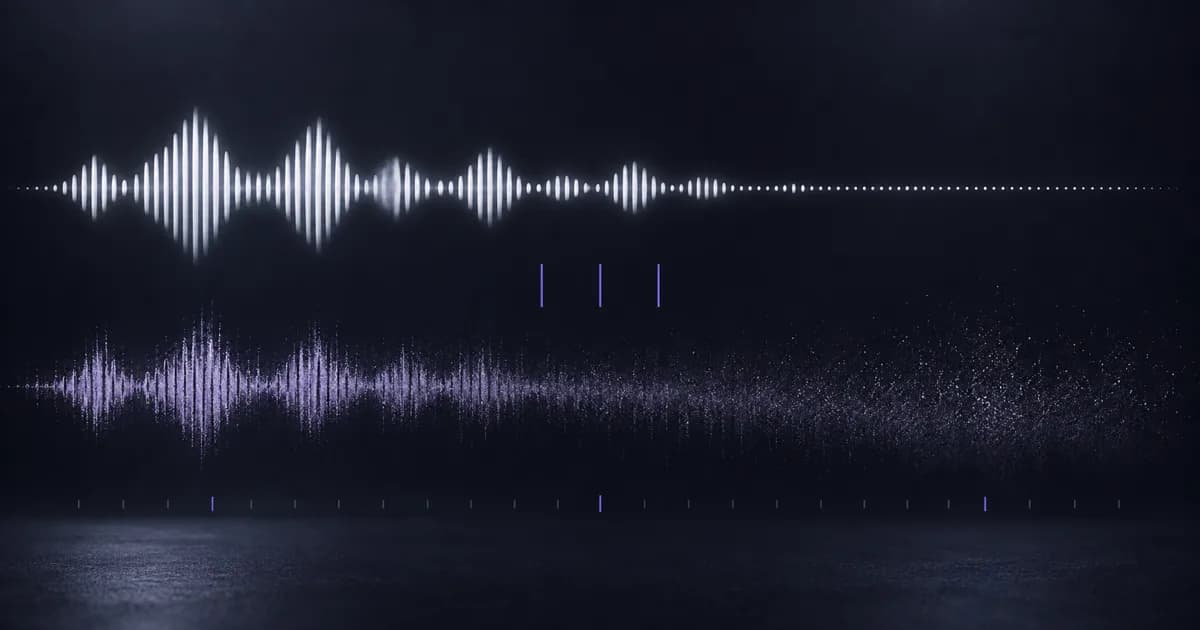
You open two rain tracks. One says 'subliminal,' the other 'supraliminal,' and both sound like a quiet voice behind weather. The labels have not told you much. In research, the dividing line is whether you can consciously report the stimulus under measured conditions. On a download page, it may just mean that one creator lowered the voice further. I would choose the file whose words you can read and check on demand. Start with how it was made: clear speech, masked speech, or a high-frequency shift.
Three files, not two slogans
Look at the file before joining the argument about labels. That argument skips the file in front of you. A laboratory prime, a masked affirmation mix, and a voice shifted into a very high frequency band are not interchangeable. They are built differently, they fail inspection differently, and they support different claims. Naming the file correctly is the first useful step.
A voice under rain, noise, music, or a tone is the common consumer mix. You might catch phrases or hear only the background. Some 'silent' files instead shift speech into a very high-frequency band. Others keep every line clear. Communities disagree about which of these to call supraliminal, so ask for the recipe before comparing the label.
Supral's default is speech you can understand: your approved script, at a pace you can follow, over a background you choose, in a private MP3. Disclosed extra layers can repeat those words. The standard track does not shift speech into ultrasound or conceal a second script. Keep those production details in view when you compare it with a file labeled 'silent.'
- Research subliminal: a stimulus the listener cannot reliably report under the test used.
- Research supraliminal: a stimulus the listener can report.
- Masked mix: quiet or competing speech under a sound bed.
- Ultrasonic or silent file: speech moved into a very high band.
- Audible track: every approved line can be followed by ear.
What subliminal means in research
The root, limen, means a threshold. In psychology, subliminal perception means a stimulus presented below the threshold of conscious awareness for the method being used. The APA dictionary describes it as occurring outside awareness. In visual studies that often means a brief flash followed by a mask. In auditory studies it means a signal participants cannot identify above chance when asked. The threshold is measured. It is not a volume percentage copied from a forum.
Researchers test awareness before looking for a change in the next response. Reviews of subliminal priming find that some effects are real. They are usually small, short-lived, and tied to the task, the timing, and a motivation the person already has. A millisecond prime in a lab is not a nightly playlist, and a result on a narrow choice is not evidence that hidden sentences rebuild a career, a body, or a relationship.
A quiet export cannot certify its own subliminal threshold. Unless presentation is calibrated and awareness is measured, the honest description is mixed, masked, or low-audibility audio. That description is still useful. It tells you what you are playing without borrowing authority the recording has not earned. If nobody measured the threshold, do not call the file scientifically subliminal.
What supraliminal means, and why the word split
Supraliminal means above that threshold. A supraliminal stimulus can be detected and, in speech, understood well enough to report. Spoken affirmations you follow line by line are supraliminal in the research sense. So is any mix in which you can still make out the sentences when you attend to them. The word does not mean magical, softer, or closer to the subconscious. It means available to report.
Online communities use the pair in conflicting ways. In many posts, subliminal means ultrasonic speech around 15 to 17.5 kHz, and supraliminal means a low voice under rain that you hear as a whisper but cannot quite decode. Other posts call the whisper a masked subliminal and call clear speech a supraliminal. A third group treats every inaudible file as silent and every audible file as supraliminal. All three maps circulate at once, which is why two people can argue for an hour and be describing different exports.
Ask what you can report after listening. Can you repeat the sentences? Then the speech is supraliminal. If you cannot identify the words above chance in a measured test, it becomes a candidate for subliminal presentation. That classification still says nothing about a self-help benefit. A whisper you prefer is a sound preference, and you should still be able to check its script.
Masked audio is usually quiet speech
A typical online mix starts with ordinary recording or text-to-speech. Someone writes or copies lines, records or generates a voice, lowers that voice under rain, music, noise, or a named tone, then loops the result. Titles promise appearance, money, love, or identity. Comments treat mood shifts as proof. None of that pattern matches a laboratory prime. It matches a mix with the speech turned down.
Your recording, background, headphones, room, and hearing all affect which words come through. One person hears sentences on a bus. Another hears only weather in a quiet room. Phone speakers hide detail that headphones reveal. Compression can smear quiet speech further. A mix that feels hidden is often masked audio, not a measured below-threshold stimulus. Raise the original voice layer, or keep a clean copy, and the sentences usually return.
A dense background makes errors harder to catch. Once the voice sits inside a dense bed, you can no longer confirm pronunciation, skipped lines, or extra phrases by casual listening. That is a production problem before it is a belief problem. The useful order is the reverse of most tutorials: approve the script, render it clearly, check every line, and only then decide whether a lower voice level still serves the session.
- A quiet voice under rain is a mix choice.
- Listeners and devices do not share one threshold.
- A clean voice file is the audit copy.
- Lower the voice only after the words check out.
Silent and ultrasonic files
Ask what 'silent' means in the production notes. The first is extreme gain reduction: the voice is turned down until the bed covers it. The second modulates or shifts the voice into a high-frequency band, often discussed around 15 to 17.5 kHz, so playback sounds empty or like a faint hiss. Community posts and old audio-forum threads treat that shift as the true subliminal and treat masked whispers as supraliminal. Those posts are describing a process, not a measured result.
You will often see human hearing described as roughly 20 Hz to 20 kHz, with upper-range sensitivity declining with age and noise exposure. A tone near the top of the range can be hard to notice and still be a poor carrier for intelligible speech. Shifting a voice up does not establish that the brain decodes the original sentences. It establishes that ordinary listening can no longer check them. If the finished file sounds like silence, you can't confirm the script, the pace, or even that the export survived compression.
Your playback chain adds another complication. Many phones, Bluetooth paths, and compressed formats do not faithfully keep very high or very quiet material. A file that looked busy in an editor can arrive on a phone as a bed with little of the voice left. That is another reason to keep an intelligible master. A method you can't verify on the device you actually use is a method you can't evaluate.
Side by side: what you can hear and check
Compare the formats by what you can still check after export. The question is not which label sounds more advanced. The question is whether you can still tell what the file says, on the headphones you use, after export. A format that fails that test can still be audio. It cannot be a script you consented to.
Two files that sound like rain may have very different voice processing. A masked whisper and an ultrasonic file can both sound like rain. Only the project, or a published script plus a clean voice render, tells them apart. Titles are marketing. Waveforms and words are the object.
Audible affirmations
- What you hear
- Every sentence
- Can you check the script?
- Yes, by ear
- Usual label
- Often called supraliminal
Masked quiet speech
- What you hear
- A murmur under the bed
- Can you check the script?
- Only with a clean voice copy
- Usual label
- Often sold as a subliminal
Ultrasonic or silent file
- What you hear
- Little or nothing
- Can you check the script?
- Not by ordinary listening
- Usual label
- Often called a silent subliminal
Laboratory prime
- What you hear
- Not a consumer mix
- Can you check the script?
- Measured in a study
- Usual label
- The research meaning of subliminal
What the self-help tape experiments found
The double-blind tape studies tested something closer to the consumer promise. Recordings were labeled for memory or self-esteem, and researchers crossed the labels with the supposed content. Some participants therefore got a label that did not match the tape. Reported improvement tended to follow the label, while the claimed objective benefits were not demonstrated. The related placebo-effects work adds to the reason for separating expectation from a hidden-message claim.
Those findings still leave room for a track you use as a personal cue. It does block a stronger claim. If people improve when they believe the tape matches their goal, and not when the hidden script matches the goal, then secrecy is a weak mechanism and expectation is a strong one. A file you can read invites a smaller, more honest use: a reminder of words you chose, played in a slot you can keep.
Priming meta-analyses answer a different question from the tape studies. They describe brief, controlled exposures and narrow follow-up tasks. They do not describe an overnight rain loop that installs a new identity. Treat small laboratory priming and consumer self-help audio as neighboring topics, not as one product with two prices. The honest sentence is short. Some subliminal perception effects exist in the lab. They do not license guaranteed transformation from a playlist.
Why a hidden script fails the only test that matters
Feeling something from a track does not tell you what the track contains. If you can't read every line, you can't tell whether the file matches your goal, contradicts itself, names someone else, or makes a claim you would never say. Creators who warn you never to check the words are protecting the mystery, not your practice. Inspection is how you consent.
Some people feel worse after repeating very positive statements that clash with their experience. Research on that pattern used sentences people could hear and judge. A hidden line removes even that protection. You can't revise a sentence you are not allowed to read, and you can't notice that it argues with you. Smaller wording is easier to keep when the words are available.
Choose a file whose words you could show to a friend. With an audible private track, you can keep the text beside the MP3. Disclosed masked layers can have that same readable source. A high-frequency export with a secret script leaves you without it. That difference will matter more on an ordinary listening day than the Latin prefix.
- Published script, or no adoption.
- Clean voice render before any masking.
- No medical, physical, or guaranteed-outcome promise.
- No warning that doubt or reading blocks results.
The inner-critic claim
You may hear that conscious speech 'fails' because your mind rejects it. The story is tidy and larger than the evidence. Conscious affirmations can feel fake. Research on overly positive self-statements shows that some people feel worse when they repeat a claim they do not believe. The remedy in that work is not to hide the sentence. It is to change the sentence until it is bearable, or to stop.
No established finding shows that hiding a sentence under rain or shifting it upward installs it past your judgment. If a line starts an argument when you hear it, a quieter copy of that line is still that line. Edit it toward one fact, one permission, or one next action. ‘I can return to the next step’ survives contact with an ordinary Tuesday more often than ‘I am already the finished version of this goal.’
With audible words, you can notice what helps and change what does not. You hear the cue, you notice whether it helps you start, and you revise it. That loop is reflection plus repetition. It is not a bypass. People who want a sound bed can still use one. The bed is atmosphere and masking, not a door around the meaning of the words.
How to choose a format for a real slot
Pick the format for a moment you actually have. Before work or study, an intelligible track of three to eight lines can mark the start of a block and then stop. During a task that needs language, spoken words often compete, so silence during the work and a short cue before it is the cleaner test. For a wind-down, a calm bed with a script you already checked can sit in the background if the level stays comfortable and a timer ends the file.
Stereo headphones matter for optional layers that send different signals to each ear. They are not required to make affirmations legitimate. Speakers are enough for a direct voice and a simple rain or noise bed. If a steady tone irritates you, drop the tone. Comfort over a week beats a theoretically ideal frequency you abandon on day two.
Decide about bedtime separately. Overnight playback is not required, and it makes evaluation harder because you can't confirm continuous listening or comfort. Test any new file while awake. If you use audio near bedtime, keep it moderate, use a timer, and move the session earlier when mornings feel worse. The sleep guide on this site covers duration and safety in more detail. A format choice should not cost you rest.
- One theme, one file, one listening slot.
- Intelligible speech when you need to rehearse the words.
- A checked script before any quieter pass.
- A timer near bedtime, and no overnight requirement.
Build the audible version first
Write three to eight lines you could say aloud. One idea per line, present tense or a plain ‘I can,’ aimed at one situation. Read them aloud. Cut any line that rushes, flatters, or predicts another person's decision. Three to eight lines are enough for a first file. A long list can become a second track later, after the short one has a slot.
Supral's free standard-voice generator makes private MP3s of up to five minutes, up to three times a day, with an emailed download link. No account is required for that standard-voice pass. Choose a voice and pace you can follow, then silence or one steady background. Listen to the complete file. Check pronunciation, pauses, and order against the script. Save the words next to the audio under a clear name.
Try the extras after you have checked the plain file. Supral's optional Mega Booster adds 12 published reinforcement affirmations in three quiet layers beneath your own script; review those extra words before adding them. It changes the mix without multiplying results. My Voice, for eligible accounts, narrates your own words, while the Booster retains a standard voice in the track's narration language.
- Approve a short script with one spoken idea per line.
- Render it clearly and listen to the whole file.
- Keep the script in the same folder as the MP3.
- Add disclosed layers of the same words only if you want more passes.
If you still want the voice quieter
If you prefer the voice further back, make a second version and change only the balance. Keep the same script, voice, and duration, then compare at the same device volume. A denser steady background can also change how much speech you notice. Check the actual mix: identical slider positions can sound very different when the source files started at different loudness.
Keep a clear version so you can still spot a wrong word. That point is your personal floor for this mix and these headphones. It will not match a forum number such as minus 20 or minus 30 dB, and those numbers are not a measured threshold of awareness. They are recipes. Recipes do not become science by being repeated.
If the voice disappears, fix the source layers. Rebalance the layers instead. The World Health Organization's safe-listening guidance is about level and duration, and a long quiet-sounding bed still counts as exposure. If the session needs the overall volume pushed up, the mix is wrong. A five-minute intelligible file at a comfortable level is a complete practice.
Claims worth refusing
Skip any comparison that promises one format will deliver by a particular day. ‘Subliminals work in three days, supraliminals are slower’ is a sales sequence. There is no official results calendar for either label. Community counts such as 21 days or 1,000 loops are folklore. A practical substitute is a fixed window: one script, one slot, two weeks, one line logged per session, then a review against one observable action.
Reject guarantees of physical, medical, financial, or relationship outcomes. A sentence cannot set bone structure, clear a diagnosis, produce a payment, or make another person choose you. The Federal Trade Commission warns against health products that promise results the product cannot deliver. The same filter fits a subliminal or a supraliminal positioned as treatment. Affirmations can cue attention and a next step. They are not care.
You can decline the silent carrier, flush, and booster stack. If the words are good, an intelligible render is enough to judge them. If the words are bad, hiding them in a higher frequency band does not repair them. Stopping is free. No prefix creates a contract that forces you to keep listening.
A two-week check, then a decision
Write down one action before you start listening. ‘I open the draft before I check messages’ can be logged. ‘I become magnetic’ cannot. For two weeks, keep one note per session: date, file, slot, and one observation. An observation can be an action, a noticing, or a miss. All three are information. At the end, decide whether the cue made the action easier to start.
Begin with the audible file for two weeks. If you later want to compare a quieter version, keep the script and routine fixed for the next window. Note the same action each time. Expectations still affect the experience, as the tape studies show, and a personal log cannot remove that. It can stop you quietly changing the goal after the fact.
Keep the version you actually want to replay. Revise lines that argue with you. Stop a format that adds checking, shame, or delayed action. Persistent low mood, anxiety, or trouble meeting daily needs deserve support beyond self-guided audio. The NHS page on raising low self-esteem is a clearer starting point than another hidden export.
- One observable behavior, written first.
- One intelligible file and one real slot.
- A later quieter test only if the script stays the same.
- Keep, revise, or stop from the log.
What to remember when the labels collide
In a measured experiment, subliminal means below conscious report and supraliminal means reportable. Consumer audio rarely measures that threshold. Clear affirmation tracks, masked whispers, and high-frequency shifts are three ways of producing a file. They can use the same script, but you need different checks to know what survives in each export.
Make a file with words you have approved and can hear on demand. Play it in a short slot, at a comfortable level, next to one action you control. If a quieter bed helps you keep that slot, keep the bed and keep the clean script with it. If a silent export only adds mystery, you already know how to decline it.
Supral takes its name from the reportable side of that distinction. Use it for the audible master. Treat every other label as a description you still have to verify with your ears and with the page of words beside the file.
Sources and further reading
These references support the evidence and safe-listening limits discussed in this guide.
Frequently asked questions
What is the difference between subliminal and supraliminal?
In measured research, subliminal means you can't reliably report the stimulus, while supraliminal means you can. Online, the words are used loosely for masked whispers, ultrasonic files, and clear affirmation tracks. The useful test is whether you can still hear and check the script.
What is a supraliminal affirmation?
It is a statement you can consciously hear and report under the test conditions. Clear spoken affirmations are supraliminal in that sense. Some communities instead use the word for a quiet whisper under rain. Ask which file they mean before you compare methods.
Are supraliminals better than subliminals?
Hiding the sentence has no established effectiveness advantage; the classic double-blind self-help tape tests did not show the advertised benefits. An audible line is better for one practical reason: you can approve it, revise it, and connect it to a real next step. Quieter presentation is a preference, not a stronger mechanism.
Is a masked subliminal the same as a supraliminal?
People sometimes use the labels that way online. In research language, speech you can still identify is supraliminal, and speech you can't identify above chance is the candidate for subliminal. A masked mix is ordinary quiet audio until someone measures awareness.
What is a silent subliminal?
Ask which recipe the creator means: speech lowered under a background, or speech shifted into a very high-frequency band. Neither recipe is a measured laboratory prime. Both make the script harder or impossible to verify by ordinary listening, especially after phone compression.
Do subliminals bypass the conscious mind?
That bypass story has not been established for consumer self-help audio. Brief subliminal primes in the lab can have small, short-lived effects on narrow tasks. They do not show that a rain loop installs a new identity while skipping evaluation. If a sentence feels false when you hear it, rewrite the sentence or stop. Hiding it doesn't repair it.
How do I make a supraliminal track?
Start with three to eight lines you could say aloud, one idea per line. Render them with a clear voice and a natural pace, listen to the whole file, and save the script beside the audio. Supral's standard-voice generator can create a private MP3 of up to five minutes, with up to three free creations per day and no account required.
Can I make the voice quieter after I check it?
Yes, make a second version and keep the clear one. Keep a clean render you have already checked, then lower the voice against one steady bed and compare them at the same device volume. Stop when you can no longer spot a wrong word. Do not raise the overall volume to recover a buried voice, and do not treat a forum decibel number as a scientific threshold.
Make a version you can hear and check.
Use three to eight approved lines and a free standard voice for a private MP3. Keep the script and try one short listening slot.
Make my audible MP3